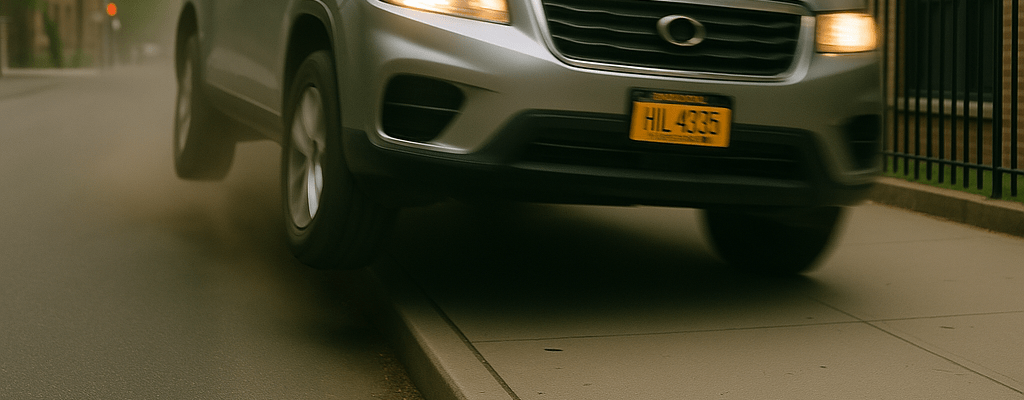
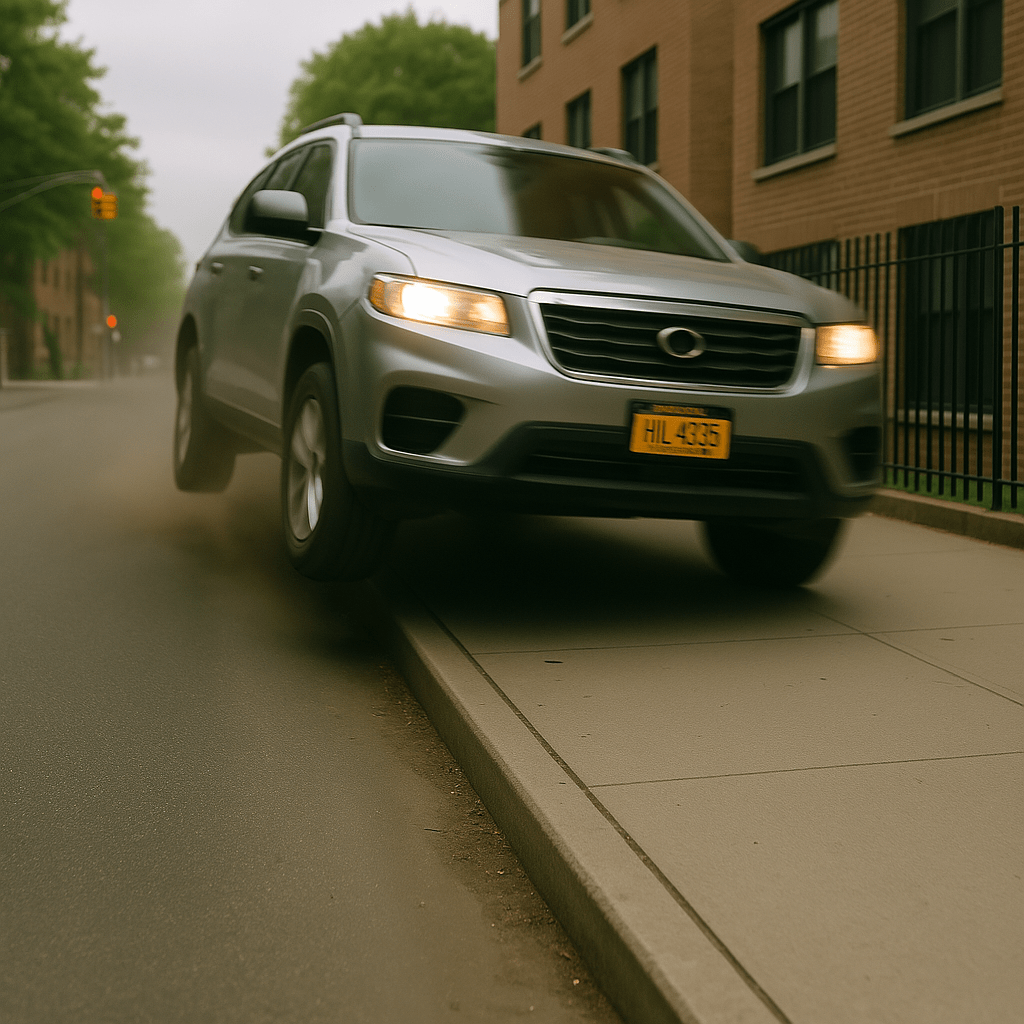
On a rainy night in South Ozone Park, Queens, Vidya Dookran-Franco was walking back to her car when a speeding taxi, launched onto the sidewalk by a collision, struck her. The 51-year-old substitute teacher, beloved in her community, never made it home. In Bayside (near 209th Street and 35th Avenue) a 21-year-old driver struck multiple parked vehicles before flipping his own car onto its roof. A 23-year-old Delta Air Lines ramp agent, Justin Diaz, was killed in East Elmhurst when an off-duty firefighter blew through a red light at high speed, T-boning Diaz’s BMW and sending it flying into a parked car. These are not isolated incidents—they are symptoms of a city failing to rein in its most reckless drivers.
New York’s streets have become a battleground where pedestrians and cyclists are forced to gamble with their lives. The worst offenders—super speeders—continue to terrorize the roads, their unchecked recklessness turning sidewalks into danger zones. The numbers don’t lie: chronic speeders are disproportionately responsible for fatal crashes, and yet, the political will to stop them remains frustratingly weak. The proposed legislation [S04045 (Gounardes) A02299 (Gallagher)] offers a straightforward solution: Intelligent Speed Assistance (ISA) technology, which would prevent the worst repeat offenders from exceeding speed limits. But with less than 2 weeks left in this session, we need you to pressure Speaker Heastie, Majority Leader Stewart Cousins, and Governor Hochul to move the legislation.
The Tech That Will Save Lives—If Politicians Would Act
For decades, safety technology has focused inward—crash-tested steel frames, reinforced airbags, lane-keeping assist—all designed to protect drivers and their passengers. But what about the people outside the car, the pedestrians, the cyclists, the mothers crossing Queens Boulevard with their kids in tow? Intelligent Speed Assistance (ISA) technology flips the script, ensuring that vehicles driven by the worst repeat offenders can no longer exceed the speed limit.
In Sweden, where the first large-scale trial (5,000 vehicles) took place over 20 years ago, ISA-equipped cars demonstrated a measurable reduction in speeding violations. London has already shown it works, implementing fleet-wide ISA with 99+% accuracy in dynamically setting the speed based on the specific road the car is on. The Netherlands found that ISA could cut hospital admissions by 15% and deaths by 21%. And yet, here in New York, where reckless driving claims lives at an alarming rate, elected officials hesitate, offering bureaucratic red tape instead of decisive action.
The New York Speed Limiters for the Most Reckless Drivers bill proposes active ISA—that would automatically prevent the worst repeat offenders from exceeding five miles per hour over the speed limit. It’s a simple intervention, that could halve the number of road fatalities of the worst drivers on the road. New York City’s own pilot program has already seen results, with municipal fleet vehicles reducing speeding by 64% and dangerous hard braking by 36% since ISA-equipped cars hit the streets over the 2.9 million miles of the testing. The city has expanded the program to include 50 school buses, a move that quietly acknowledges what researchers already know: ISA works.
A Smarter, Quieter, Cleaner Future for Queens
For decades, transportation projects in Queens have prioritized speed and expansion over livability. The widening of the Long Island Expressway was a textbook example—more space, more cars, more pollution. Instead of easing congestion, it amplified noise levels and worsened air quality, just so that Long Islanders could travel to Manhattan quicker. To appease residents, they added sound barriers, which do nothing to stop the pollution and little to stop the sound. The entire project will cost over a billion dollars, has killed hundreds of trees, and has made our neighborhood worse for the rest of our lives.
Intelligent Speed Assistance offers a radically different approach—one that prioritizes safety, sustainability, and community well-being. By reducing rapid acceleration and hard braking, ISA curbs exhaust emissions and lowers noise pollution, making streets quieter and air cleaner. A study in Australia show that active ISA could save $3.7 billion annually, proving that safer streets aren’t just a moral imperative—they’re an economic one. Fewer crashes, fewer sirens, fewer grieving families. Instead of expanding highways and inviting more chaos, New York has the chance to lead the nation in smarter, safer streets—if only lawmakers would act.
Who Pays for Speed Limiters? Ensuring Fairness Without Burdening the Working Class
Some critics of Intelligent Speed Assistance might argue that the cost of implementation could pose an undue financial burden on drivers. But the reality is simple: the most reckless speeders should bear the cost of making our streets safer. Those mandated to install speed limiters—repeat offenders who have demonstrated a disregard for public safety—will be responsible for the expense, unless the courts determine financial hardship.
The price? A one-time installation fee of around $100, plus a modest $4 daily lease fee—far less than the cost of a single speeding ticket, a wrecked car, or worse, a life lost to reckless driving.
Addressing the Reality: Why Habitual Speeders Must Be Given a Safer Path Forward
License suspensions sound effective in theory—strip dangerous drivers of their right to operate a vehicle, and they won’t be able to speed anymore. But reality tells a different story: 75% of people with suspended licenses continue to drive. That’s three out of four drivers, still speeding, still endangering lives, except now they’re doing it illegally, without oversight, and often without insurance.
This is not a concession to reckless drivers—it’s a way to rein in their behavior and protect the public from their worst impulses. The courts will have an effective tool to control habitual speeders, offering them a chance to prove they can operate a vehicle responsibly. Instead of allowing chaos to continue unchecked, this bill places reckless drivers under strict oversight—ensuring safer roads for everyone in Queens and beyond.
What’s Stopping the Progress?
So why isn’t it law? Why do lawmakers stand idly by as reckless drivers continue their deadly rampages? The European Union mandated ISA in all new vehicles starting in July 2024, anticipating a 26-50% reduction in fatalities. New York, for all its claims of leadership, lags behind, only now considering it for the worst 1.5% of drivers. Each delay, each legislative stall, each excuse lets another tragedy unfold—another pedestrian thrown onto the pavement, another bicyclist left bleeding in the street. The time for hesitation has long passed.
Luckily Families for Safe Streets will not rest until this policy is law. Their group confronts the epidemic of traffic violence by advocating for life-saving changes and providing support to those who have been impacted by crashes. They will keep on fighting for common sense policies like these, until every family will be safe walking along the streets of New York.
The real question is: How many more lives must be lost before politicians act? How many more grieving families must demand justice before the city prioritizes safety over appeasing reckless drivers? The time for half-measures is over. New York must mandate ISA technology for chronic repeat speeders and finally take decisive action to protect its residents. Time is running out for Speaker Heastie, Majority Leader Stewart Cousins, and Governor Hochul to take action, so please remind them to prioritize our safety this legislative session.
 Eastern Queens Greenway