
On Thursday, July 31 at around 2:18 p.m., 55-year-old Bayside resident Zhao Feng Zhen was riding her bike southbound on Hollis Court Boulevard near 50th Avenue when she was struck from behind by a 2015 Nissan Rogue driven by a 62-year-old woman. The collision threw Zhen onto the pavement, inflicting severe chest trauma. She was rushed to New York-Presbyterian Queens Hospital, where she was pronounced dead. The NYPD Highway District’s Collision Investigation Squad says they are investigating the crash, but no arrests have been made.
Initial Coverage: Victim Blaming Takes Center Stage
News reports rushed to label 55-year-old Zhao Feng Zhen’s death as the latest in a “surge” of e-bike collisions, dwelling on rider behavior (which we have no evidence of) rather than asking why our streets remain deadly. By focusing on collision statistics and speculating about delivery app registration, early coverage obscured the real story: this crash was not an unavoidable accident but the inevitable outcome of institutional inaction.
Context of the Crash
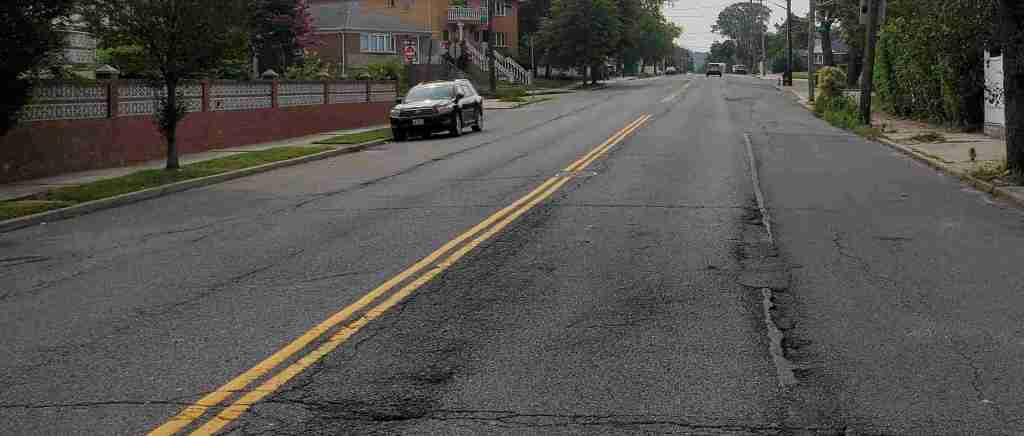
What the reporting failed to address was how the design of this street is incredibly dangerous to everyone who uses it. This is a long, strait, wide path that leads people to/from the (newly widened) Long Island Expressway. The lack of traffic lights/stop signs encourage drivers “open up” to highway speeds on this residential road. Does anyone really need a neighborhood lane that’s 16 feet wide? Actual highway lanes on the Long Island Expressway are just 12 feet wide.
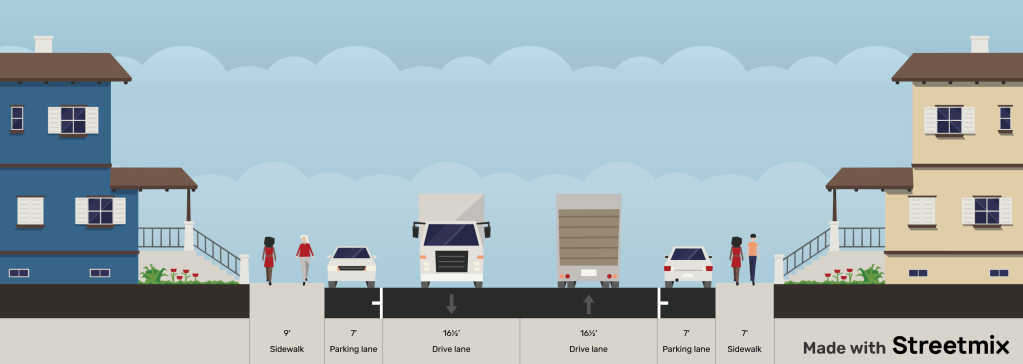
The North American Cities and Transit Agencies recommends “(l)ane widths of 10 feet are appropriate in urban areas and have a positive impact on a street’s safety without impacting traffic operations.” They recommend not using lanes greater than 11 feet. Lane width that encourages speeding probably had a lot to do with Zhao Feng Zhen being killed. But also, with a street so incredibly wide how was the driver not able to safely pass a cyclist?
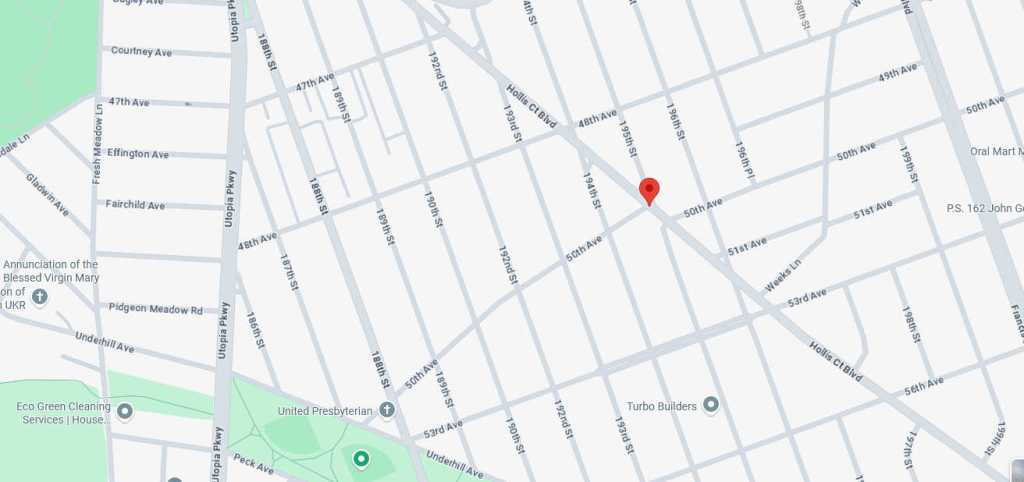
Also lacking from the new article, is how non-sensible the street pattern is in this area. With multiple conflicting grids and cut-through streets, a direct path like Hollis Court Boulevard entices drivers to avoid side streets. At the same time, cyclists that don’t know the area or need to get someplace direct, don’t have clear alternatives. Many of the side streets have dangerous stop-sign intersections with low sight lines due to parking or hills where you have to cross speeding traffic.
The long delayed greenway along Peck Park (just south of the crash) would have provided a safe east/west route…if it wasn’t delayed in the Parks Department. The “Complete Utopia” proposal, turning Utopia Parkway into a complete street with a protected bike lane would have given a safe north/south route…if it wasn’t killed by the DoT. One of our members sent over 1,000 signatures to the DoT in 2021 asking for a protected bike lane on Utopia WHICH WAS APPROVED BY THE COMMUNITY BOARD, of which there has been ZERO movement from any city agency since.
There have been calls to make this area safer, most of which were delayed, watered down, or rejected by those in “leadership” roles across the city. That, often silent, rejection may have cost Zhao Feng Zhen her life.
Policing Failures: When Speed and Recklessness Go Unchecked
Every day, cars and SUVs barrel through Eastern Queens with little fear of traffic enforcement. Despite repeated injuries and deaths, the NYPD’s 111th Precinct has not deployed targeted speed enforcement or dangerous driving crackdowns. Without more regular patrols, automated speed cameras, or stepped-up ticketing, drivers have no incentive to slow down or watch for vulnerable road users. The 111th can’t just wait for 311 complaints (which they’ll respond to hours later after the driver already left), they have to actively enforce traffic violations as they see them.
Community Board Obstruction: Right Wing Politics Over Safety
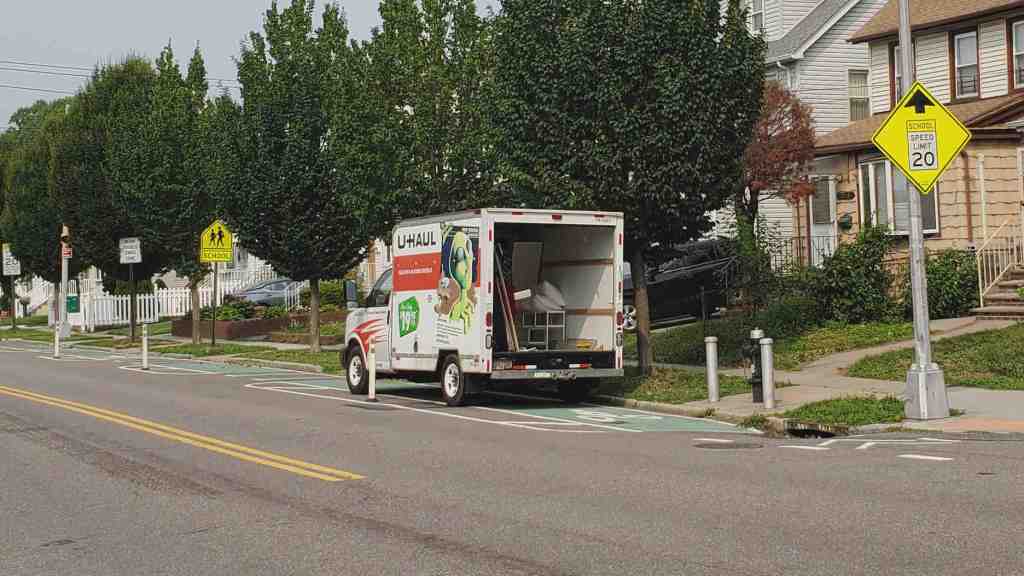
For years, Community Boards has stalled proposals for protected bike lanes in Eastern Queens. Under the guise of “neighborhood character” and fear of parking loss, board members derailed traffic-calming designs that would have physically separated cyclists from fast-moving traffic. Their resistance to even a basic paint-and-post lane design left bike riders like Zhao Feng Zhen perilously exposed. Instead of upholding their responsibility, the Community Boards victim blame those getting injured.
City Council Apathy: Silence Amid Constituents’ Deaths
Several local council-members represent districts where dangerous streets routinely claim lives. Yet when neighbors gathered to demand safer streets, their elected officials remained conspicuously quiet. No community town hall. No public statement. No budget push for roadway redesign. Their inaction sends a clear message: motorist convenience trumps constituent safety.
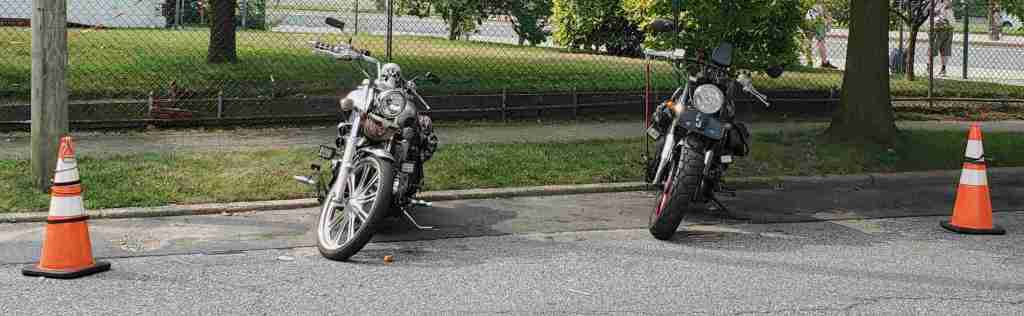
Just feet away from the crash, two very expensive motorcycles, both adorned with skulls, have illegal reserved parking with two cones. Don’t complain that we can’t put in street safety due to lack of parking, when we use our parking for this.
DOT Negligence: No Protected Network, No Solutions
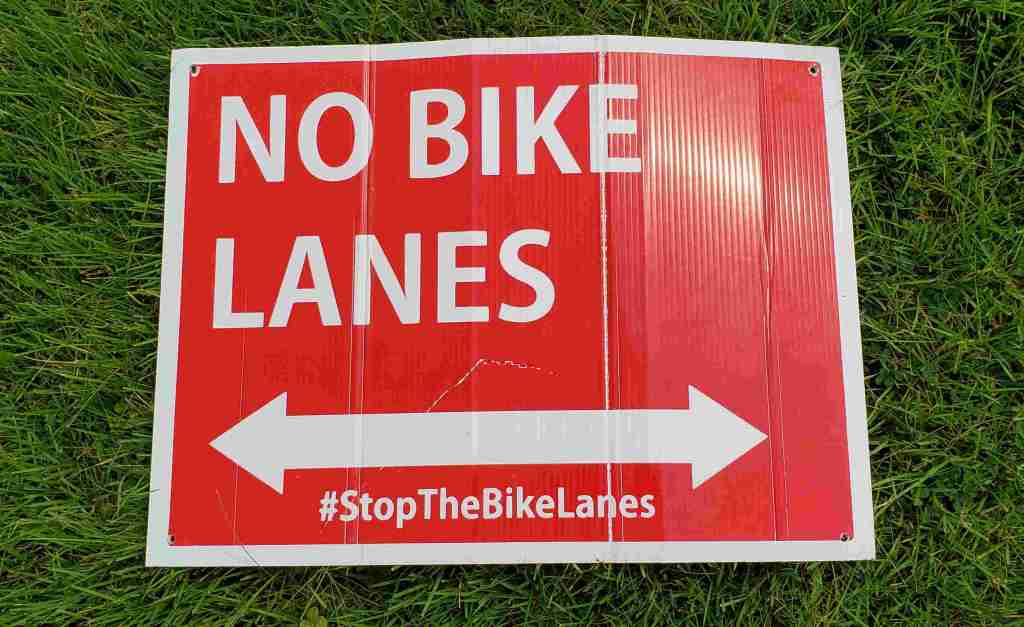
The city’s Department of Transportation has approved dozens of protected bike lane projects citywide—but despite years of calls we still don’t have a protected bike lane network in eastern Queens. That’s not asking for a bike lane on every street, just a loose grid of north/south and east/west bike lanes. After years of work there were a few protect bike lanes installed, and those have been a major success for the neighborhood cyclists. They are actively being used, at some times of the day with more cyclists than drivers (though to be honest, there are currently more drivers than cyclists on a weekly average). But after DoT removed one street’s parking, hateful signs began popping up and now everyone has lost their nerve for any new infrastructure. Silence on this issue has allowed Vickie Paladino to set the narrative, which has pushed back the street safety movement by decades.
Parks Department Delay: Eastern Queens Greenway on Hold
Peck Park’s promised section of the Eastern Queens Greenway has lingered in the Parks Department’s pipeline for years. Local advocates have pressed for a design plan and construction timeline, but all they’ve received are vague assurances and shifting deadlines. Without a protected greenway path through this critical park, cyclists are funneled back onto Hollis Court Boulevard—directly into harm’s way.
A Call for Accountability and Action
No more blaming victims. Zhao Feng Zhen’s death demands real answers and real solutions:
- NYPD must prioritize targeted patrols on high-risk corridors like Hollis Court Boulevard and actively ticket drivers in surrounding bike lanes instead of waiting for 311 calls.
- Community Boards should demand a protected bike lane network and work with the DoT to find the best routes through our neighborhoods, not just the easiest place to shove in a few miles to pretend they care. Utopia Parkway is a key alternative that connects to multiple bike lanes and would give hundreds of kids currently cycling to school a safe passage.
- City Councilmembers must publicly champion street safety budgets and drive DOT to expand protected networks; silence on this issue is literally killing our neighbors.
- DOT needs to fast-track a network of protected bike lanes, telling the community board it’s going to happen, but listening to the entire community (not just those given power) about which streets to put them on.
- Parks Department must release detailed plans and a firm timeline for the full Eastern Queens Greenway, especially the Peck Park section.
Only by confronting these systemic failures can we honor Zhao Feng Zhen’s memory and prevent the next avoidable tragedy. Your office gives you an obligation, your silence is your liability.
 Eastern Queens Greenway
[…] gears of administration are moving slowly, there is a real cost to these delays. We’ve seen cyclist deaths and pedestrian deaths that might have been prevented if this infrastructure would have been built […]
LikeLike