
In a contest that has come to symbolize a broader debate over how New York City should manage streets, transit and neighborhood change, voters in the 19th Council District — the stretch of northeast Queens that includes Douglaston, Bayside, Whitestone and parts of College Point — face a choice between two sharply different styles of representation and two distinct approaches to public safety and mobility.
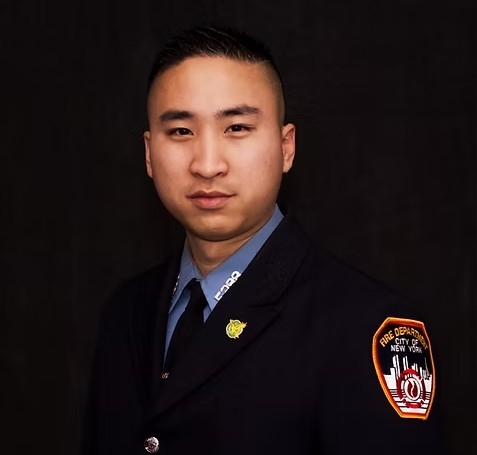
Benjamin Chou, a Douglaston‑born, active New York City firefighter who won June’s Democratic primary by a wide margin, is running as a candidate defined by his professional experience responding to crashes and other emergencies. He has framed his campaign around the conviction that many tragedies on city streets are preventable and that the City Council has the tools to legislate and fund changes that will make roadways safer. Chou emphasizes engineering and enforcement measures: finishing the Eastern Queens Greenway, building a Queens Waterfront Greenway, and expanding daylighting at intersections. He also urges expanding transit choices for the district, proposing a ferry route to Bayside, increased Long Island Rail Road service and even floating the long‑term idea of extending the 7 subway line beyond Flushing. On policy questions such as congestion pricing and shared micromobility, Chou describes himself as open‑minded, seeing those tools as part of a broader menu for addressing the district’s sparse transit options.
We believe the incumbent, Council Member Vickie Albrizio Paladino, inherited a family business (Paladino Printing) but there is very little information about her career before the City Council so we could not confirm it. She was first elected in 2021 as a Republican, emphasizing local control on street desing, arguing that changes to streets and transportation must be driven by the people who live and work in the neighborhoods affected. She has been skeptical of bike‑lane and greenway proposals, questioning whether they reflect local travel patterns and warning against designs she believes will disrupt car‑dependent routines, inconveniencing seniors and small businesses. Her critics say that posture has at times crossed into obstructionism; supporters say it reflects a necessary check on agency plans that they view as outsider.
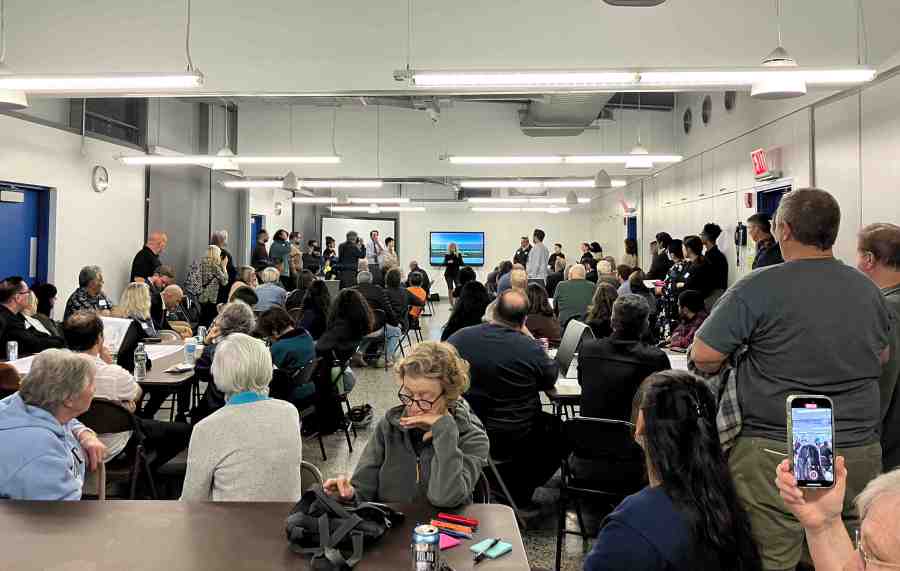
Beyond policy differences, the campaign has hinged on tone and method. Chou runs as a policy‑first problem solver whose first‑responder background he casts as grounding for pragmatic safety fixes. He uses personal experience on emergency scenes to press for both capital investments and changes in enforcement and engineering. Paladino is often described — by local reporters, advocacy groups and opponents — as confrontational and combative, a lawmaker who courts fights over cultural and procedural questions more than specific projects. Episodes at public meetings and in hearings have fueled that perception, with some residents and civic groups recounting clashes in which she interrupted deliberations or urged dissenting attendees to leave. Paladino’s supporters counter that her forceful approach is a deliberate strategy to defend what they see as neighborhood priorities against outside activists and agency overreach. Thomas Paladino (Vickie’s son and campaign director) said passing legislation isn’t what the councilmember’s constituents expect her to do.
Paladino has drawn criticism for a series of inflammatory public comments that opponents and some colleagues say raise concerns about temperament and public safety. In May 2024, during demonstrations on college campuses over the war in Gaza, she described student protesters as “monsters” who must be “slayed”, language that many saw as violent and dehumanizing. In January 2025 she posted on X, in response to reporting about illegal sidewalk parking, that “you can just tell when a guy has never been punched in the face.” More recently, in June 2025 she called for the deportation of Assemblymember Zohran Mamdani in an X post. Vickie also walked out of a public input session DoT was hosting on the Northern Queens Waterfront Greenway to say…that the process had no public input.
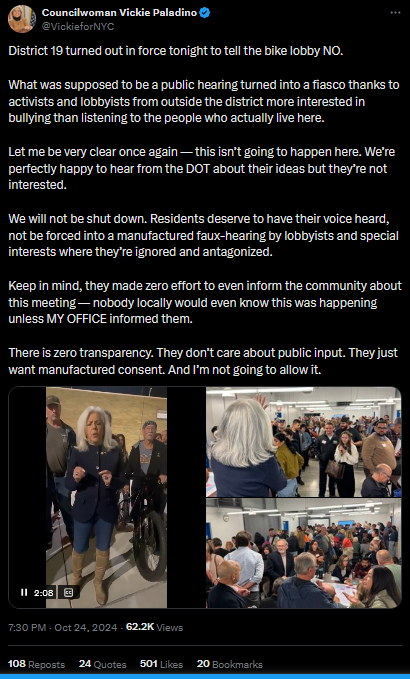
Ben Chou blends personal memory and first‑responder urgency in his pitch to northeast Queens voters, drawing on a lifetime of riding and walking the neighborhood to rebut critics of bike and greenway projects. “We walked, jogged off the river, the bay. It’s a nice function that’s being utilized by our community, our families. It’s not a ‘pipeline for criminals,’” he said, characterizing his opponent’s rhetoric as “fear‑mongering” that “is trying to empower a base of people by projecting a villainous image on people that want any form of change.” Ben is referencing Paladino’s claim that the proposed greenway will be a “…kind of like a runway if anybody is committing crimes that’s a big concern of mine, they could hop on that.”; you should read our full Streetsblog article of the greenway meeting with Paladino.
While acknowledging the district’s car dependence, Chou argues that expanding choices is practical, not ideological, noting that when residents “see the numbers they understand the need for more safety measures,” and that the current toll of traffic fatalities makes a case for change that he insists most neighbors will support once they understand the stakes. Ben has received the endorsement from StreetsPAC. He has also created videos about his support of the greenway.
As election day approaches, both campaigns are trying to translate their narratives into votes. Chou is betting that a message anchored in public‑safety urgency and expanded transit will resonate with voters alarmed by traffic deaths and eager for alternatives to long car trips. Paladino is relying on a base that prizes neighborhood autonomy and seeks pushback against policies perceived as imported or misaligned with local life. For the many residents of northeast Queens who view streets as both lifelines and liabilities, the choice will be a test of which approach they believe will better protect their daily routines and their neighbors’ lives.
 Eastern Queens Greenway