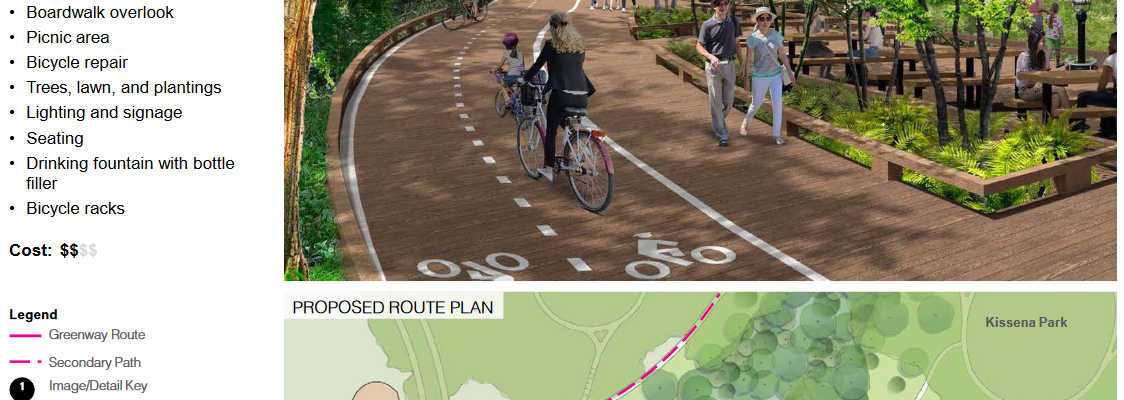
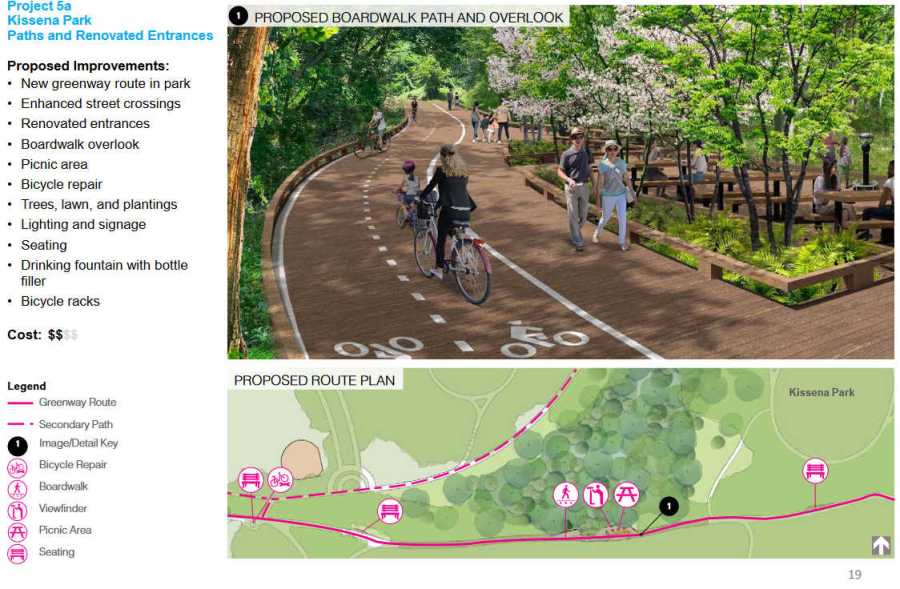
In the spirit of progress, the Eastern Queens Greenway is moving forward with a significant leap, thanks to the Department of Parks unveiling the long-awaited design for the next phase of the Destinations: Greenway project. With substantial funding and advocacy from Council Member Sandra Ung, who secured $43.4 million for the project, this greenway is set to enhance connectivity and accessibility throughout Eastern Queens.
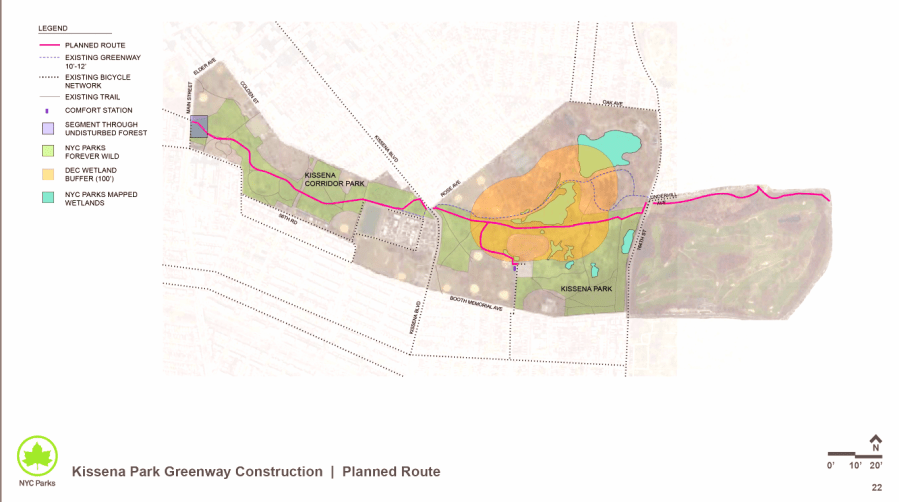
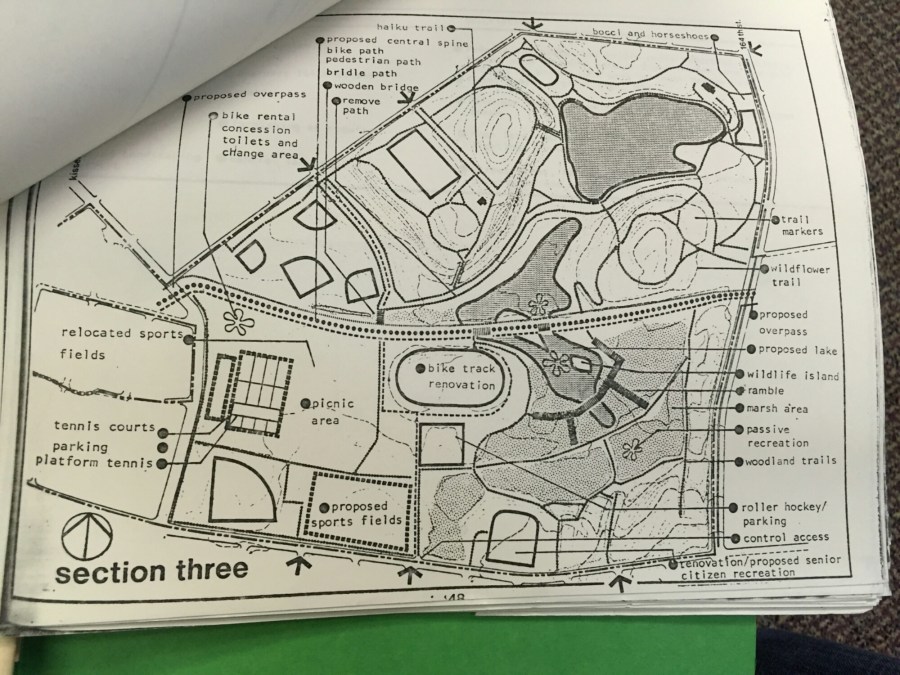
The critical aspect of this plan remains unresolved is the connection to the northern part of Kissena Park. The connection did exist in the Destination:Greenways plan (far left of the map below) but we’re not sure why it would have been removed from the most recent version (above) and hope that can be corrected soon.
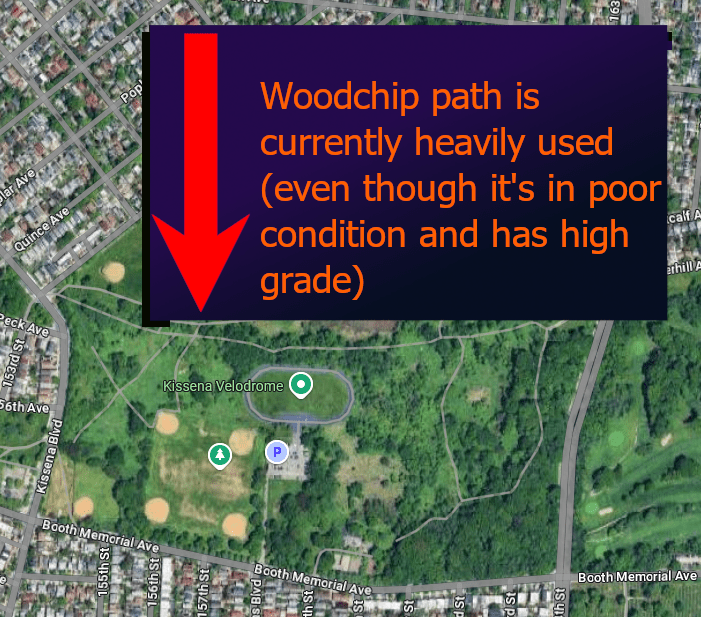
The proposed design must address the missing link to ensure everyone can enjoy all Kissena Park offers. Despite the challenges posed by the grade differences between the north and south parts of the park, the value of this connection greatly outweighs the effort required to overcome these obstacles. The heavy use of the current, albeit informal, woodchip route demonstrates its necessity and the community’s desire for it. The planning team has acknowledged the community’s request, and we hope this vital connection will be included in the final design.
Included in the old Philadelphia Plan, a north/south connection was envisioned but never implemented. We can see in this plan the “wooden bridge” would connect the north section of the park to the greenway. Now that we’re finally building the greenway, we can’t forget about this bridge (or the modern equivalent).
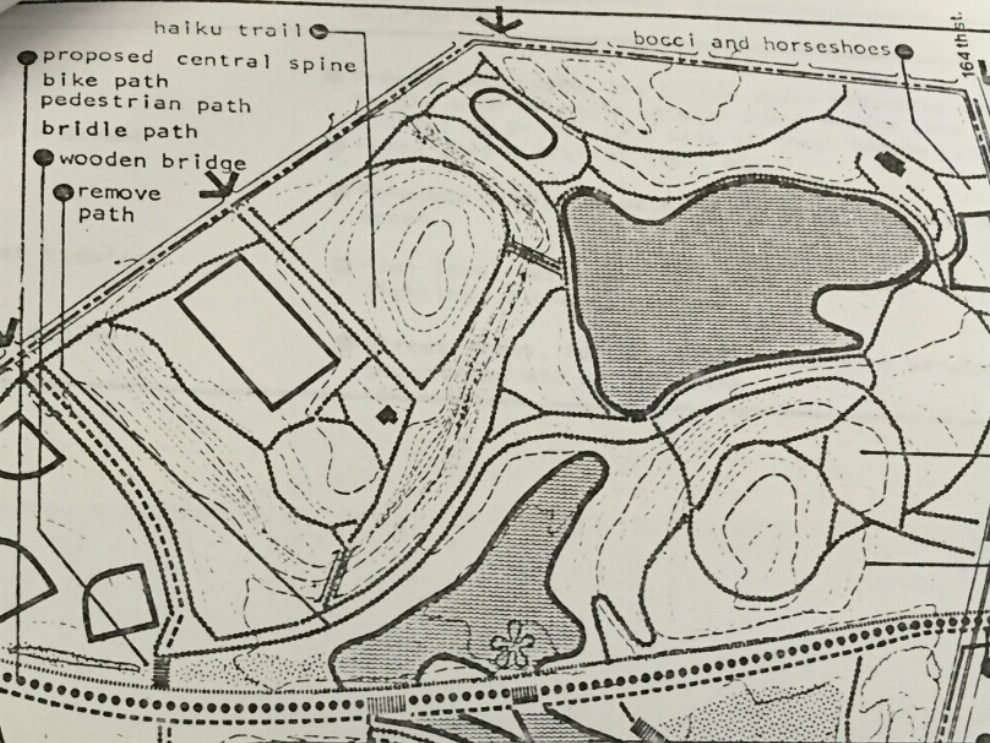
It’s important to highlight that the greenway path is the sole westward connection on this map, as the area south of the baseball fields is marshland. Given that the current path going through the old marshland is already in poor condition—partly due to its location in the former Flushing Creek bed—we anticipate it will be allowed to deteriorate further once the greenway is operational. This makes the greenway connection the essential route for parkgoers on the north side of the park to travel west.
Furthermore, once the greenway is established, we propose daylighting Flushing Creek in place of the old path. Transforming this area into a wide, deep channel would not only manage substantial water runoff but also beautify this section of the parkland. That will be far more useful than the current path that constantly needs repairs due to the water draining there.
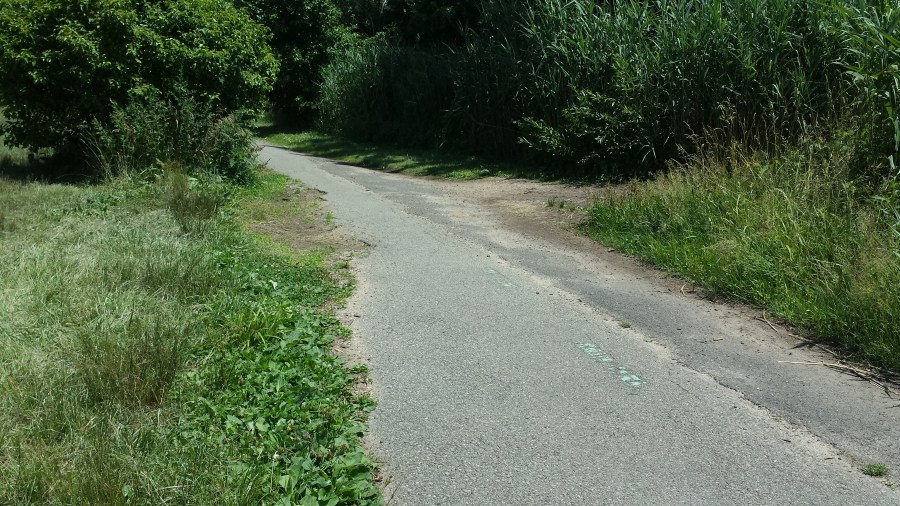
When it rains, the current path can be fully submerged. Though even when not water-logged, the path narrows every year due to the natural drainage to this site. It makes no sense to continue to repair this path instead of building a connection to the new greenway path at a higher elevation.
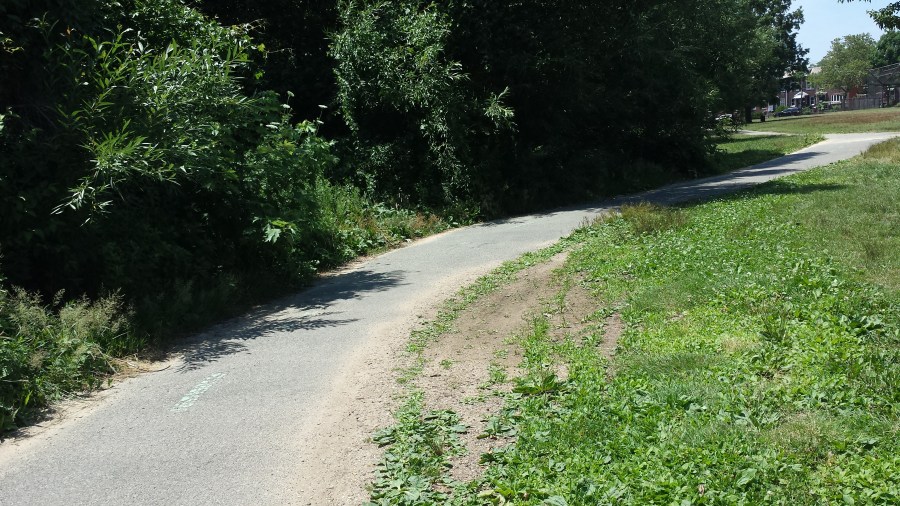
Now, more than ever, it’s crucial for our children and the community to engage with all parts of the park. The northern section of Kissena Park is home to popular amenities such as the lake, bocce ball courts, tennis courts, and multiple playgrounds. Connecting this area with the greenway will allow residents on the north side to access the velodrome and other attractions on the south side seamlessly. This integration is fundamental to the overall goal of the greenway: to connect people with their parkland, not just facilitate transit through it.
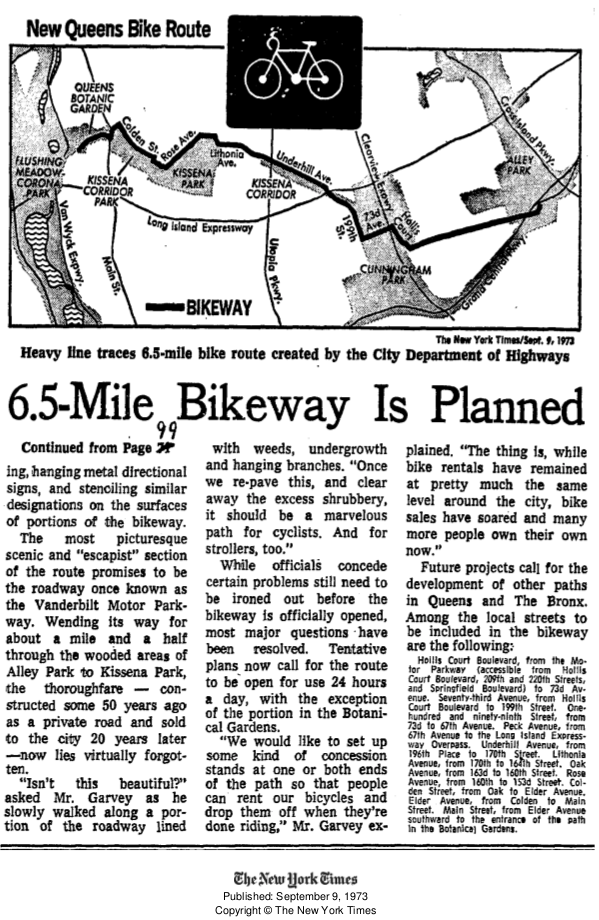
This article from the New York Times in 1972 proposes adding concession stands and bike rentals. Although these were never built, it shows that the point of this infrastructure was always to be a destination, not just a highway.
By addressing this missing link, we can create a cohesive, accessible, and vibrant park that serves all residents and visitors, embodying the true spirit of the greenway project. This project isn’t just about building infrastructure; it’s about building connections—between people and their parkland, across different parts of the community, and through generations. Let’s continue that the Philadelphia Plan envisioned to unite our parkland and bring people together, fulfilling the vision of connected and thriving green spaces.
 Eastern Queens Greenway