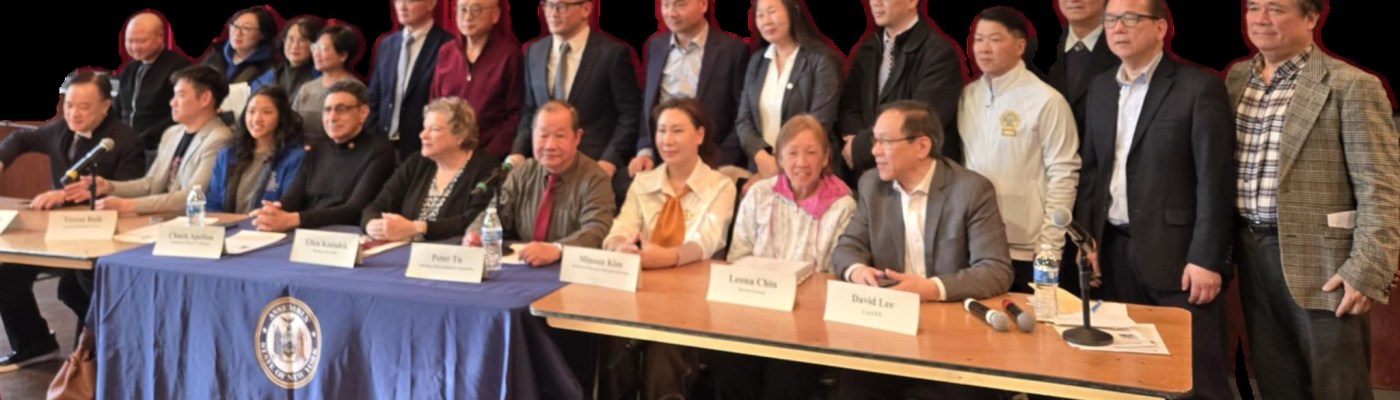
In a bid to re-imagine Flushing’s future, NYS Assemblyman Ron Kim (D-Flushing) recently convened a panel discussion to gather community insights on enhancing local tourism, fostering economic growth, and expanding access to parks and cultural programming. As the newly appointed chair of the Assembly’s Standing Committee on Tourism, Parks, Arts, and Sports Development, Kim’s initiative underscores his commitment to leveraging community voices to shape policy.
The event, moderated by David Lee, President of the League of Asian Americans of New York, brought together a diverse group of panelists, each representing a unique facet of Flushing’s vibrant community.
- Chuck Apelian, Chair of Queens Community Board 7
- Teresa Baik, Director of Youth for Korean Community Services
- Leona Chin, President of Kissena Synergy
- Minsun Kim, President of the Museum of Korean American Heritage
- Ellen Kodadek, Executive Director of Flushing Town Hall
- Peter Tu, Senior Advisor to the Flushing Chinese Business Association
- Michael Wang, President of the Asian Real Estate Association of America (AREAA) New York East
- (Lara Gregory, Esq. of Lara Gregory and Associates, was scheduled to attend but was not present)
The panel’s discussions spanned a wide array of topics, from promoting youth development through sports to supporting the arts and senior services. Each panelist brought a unique perspective, reflecting the rich tapestry of Flushing’s community. The event served as a testament to the power of collaboration and the potential for grassroots initiatives to drive meaningful change.

Athletic Competitions as Catalysts: Flushing’s Potential in Tourism and Youth Sports
Leona, the President of Kissena Synergy and a long-time member of the Eastern Queens Greenway, spoke about her organization, which is a proactive, inclusive, diverse, multigenerational, multilingual, and multi-abled volunteer team located in Kissena Park in Flushing, New York. They act as environmental stewards, community service agents, and civic engagement educators. She shared that Kissena Synergy volunteers include members from Special Olympics, Boy Scouts, universities, high schools, various civic organizations, and individuals involved in prevocational and day habilitation programs. She explained, “As a parks group, we sought programming for our youth and special needs populations.”
Leona Chin drew on her personal experience as a parent of a former youth athlete to underscore the economic and cultural opportunities tied to athletic competitions. She pointed out the significant surge in business activity that accompanies national and international sporting events. These gatherings bring athletes and their families into host communities, sparking spending across a wide array of sectors—from travel and lodging to dining and cultural experiences. Flushing is uniquely positioned to benefit from such events; families, can enjoy flavorful meals, explore international food markets, and visit a host of attractions—all without the need for a car. The neighborhood’s walkability and rich culinary and cultural landscape make it an ideal destination for visitors.
Leona also shared insights into Kissena Synergy’s ambitions for youth sports development. The program, which supports volunteers involved in activities like cycling, archery, and fencing, is advocating for the reinstatement of the Empire State Games. Additionally, she proposed increasing the number of local youth athletic competitions, stressing that community involvement and heightened visibility are essential for the success of such initiatives. Her message resonated as a call to action for renewed focus on youth sports and their broader impact.
In response, a parent remarked that a NYC Parks summer tennis program served as the springboard for her child’s success in competitive tennis, and she mentioned that her child is now a Division III athlete.
Teresa Baik of Korean Community Services (KCS) and Michael Wang of the Asian Real Estate Association of America (AREAA) New York East reiterated the importance of athletic activities in nurturing a child’s social and mental well-being. Wang, however, also shed light on a challenge: the difficulty of securing affordable rental spaces for hosting athletic events and competitions.
Pathways to Progress: Connecting the Eastern Queens Greenway with the Empire State Trail
Dr. Joby Jacob provided a broader perspective on outdoor recreational infrastructure. He noted that the Empire State Trail, launched by former Governor Cuomo, connects various trails across New York State, forming a 750-mile corridor that extends from Canada to Manhattan and generates an annual revenue of $274 million. Yet, Jacob pointed out a glaring oversight: Cuomo’s trail completely ignores Brooklyn, Queens, Nassau, and Suffolk counties. Joby expressed optimism, though, citing over a decade of advocacy and collaboration with local elected officials that has led to significant progress in closing gaps within the Eastern Queens Greenway. Integrating the Eastern Queens Greenway—part of the Brooklyn-Queens Greenway—into the Empire State Trail could attract tourists and enable athletics without the need for new stadiums or corporate management.
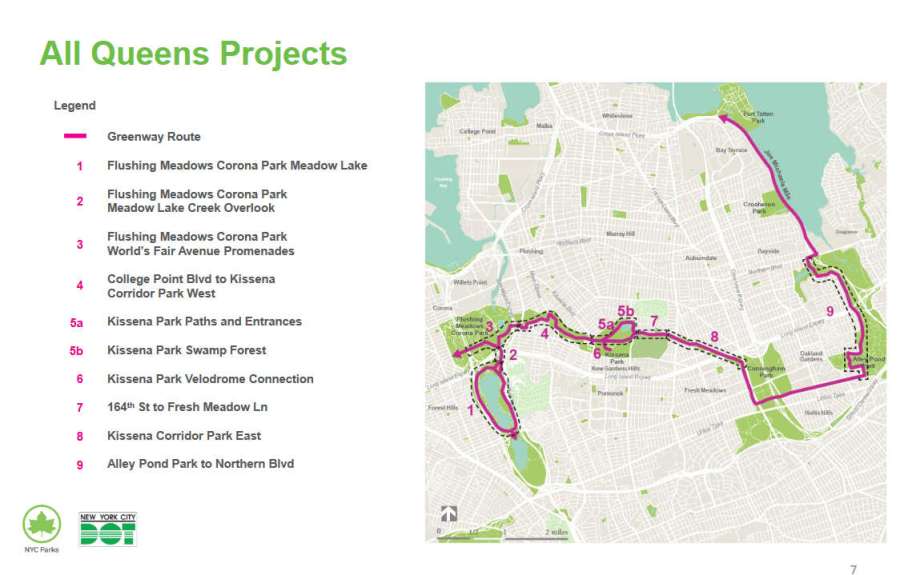
Leona remarked, “Joby’s comment about the Brooklyn-Queens Greenway generated considerable interest. When Joby mentioned the revenue and the significance of having the Empire State Trail running through specific neighborhoods, along with the potential impact of increased public awareness regarding the Brooklyn-Queens Greenway, I noticed Ron Kim moving to grab the microphone. It appeared that AM Kim wanted to respond immediately after Joby’s comments, but the moderator held the microphone until the last community member had spoken. He clearly found the update, revision, and connection to the current Empire State Trail maps to be actionable.” Joby informed us that Kim gave him an approving thumbs-up as he concluded his remarks and took his seat.
In his closing comments, Kim emphasized that the Empire State Trail fosters economic growth in upstate regions, surpassing agriculture as the primary economic driver in certain areas. He pointed out that the trail has become a part of the experience economy. He mentioned that trail users will likely stop in Flushing to enjoy local restaurants and explore cultural venues.
Peye Wong from Kissena Synergy sat beside Gary, a team leader at the organization. She shared her thoughts on Assemblyman Kim’s remarks: “It felt like he was speaking directly to us when he mentioned that ‘young people may not be able to buy a home, but they are willing to pay for experiences.’ He referred to this generation as the ‘experience generation,’ which resonated with me. My friends and I prefer to spend our money on concert tickets, trips, cruises, hikes, and pop-up events, rather than on jewelry, cars, or homes.”
“All we need is for them to add the trail to the brochure.” Peye Wong
Even Assemblyman Kim’s office intern, Ashley—a cross-country and track athlete at Francis Lewis High School—was struck by the potential. She confessed her surprise at learning about the Queens Greenway and the possibility of a seamless trail to Long Island. Ashley, who trains at Kissena, Alley Pond, and Cunningham Parks, suggested that improved signage and lighting could make the trails more accessible and inviting.
Through the perspectives shared by panelists and community members alike, a shared vision emerged: leveraging the region’s natural and cultural assets to foster tourism, community engagement, and economic development. With advocates like Chin, Jacob, and Wong leading the charge, Flushing’s future looks as promising as the trails themselves.
Speaking Truth to Power: Kim Calls Out Funding Practices in NYC Government
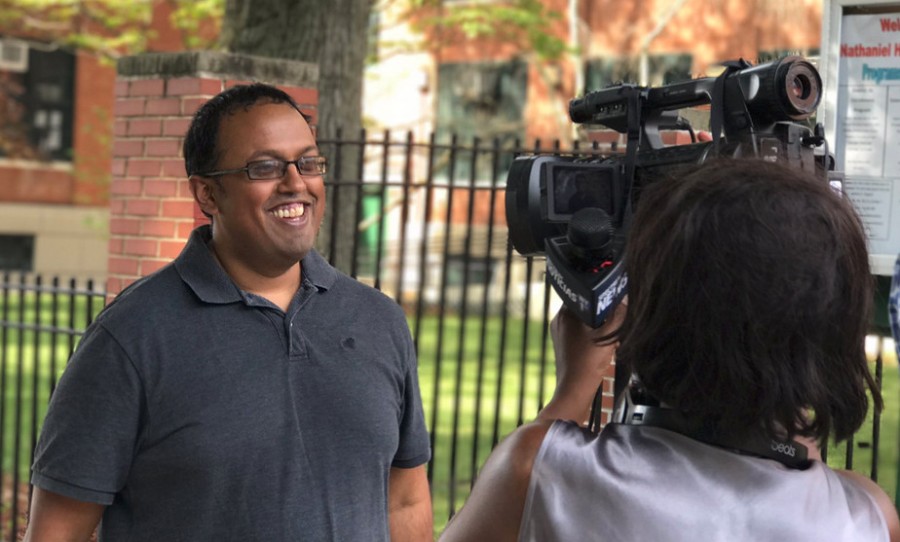
Earlier in the event, a representative from Korean Community Services (KCS) raised concerns about the intensifying competition for grant funding, cautioning that the situation could worsen. To address this challenge, she appealed to Assemblyman Ron Kim for additional support from the Assembly.
In his closing remarks, Kim underscored the vital role played by organizations like KCS, acknowledging their essential contributions to the community. While he would strive to provide financial support, he felt it was unacceptable for New York City to delegate its responsibilities to not-for-profits. He criticized this practice as a way for elected officials to avoid accountability, saying, ‘Hey, I’ve allocated money to that NFP (non-for profit) over there; don’t blame me, take it up with them.’ In contrast, municipal or county authorities typically manage after-school activities and similar programs in Nassau and other suburbs. It was refreshing to hear Kim’s perspective when so many other politicians avoid government accountability.
Queen’s Next Chapter: Connecting the Eastern Queens Greenway to the Empire State Trail
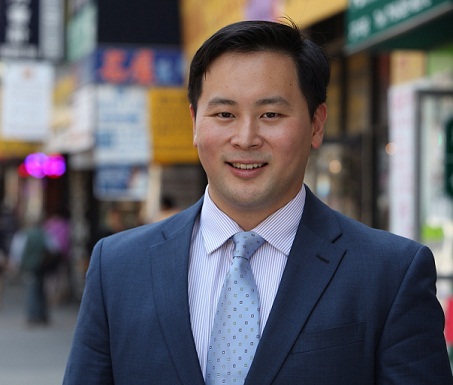
As Assemblyman Ron Kim steps into his new role as chair of the Assembly’s Standing Committee on Tourism, Parks, Arts, and Sports Development, it’s worth pausing to acknowledge the depth of his public service. His tenure on the Committee on Aging was marked by a fierce commitment to accountability and advocacy, even in the face of political adversity. Kim’s unwavering dedication to protecting New York’s most vulnerable populations—despite former Governor Cuomo’s infamous threat to “destroy” him—cemented his reputation as a principled and courageous leader.
Now, with his focus shifting to tourism and development, the vision for connecting the Eastern Queens Greenway to the Empire State Trail could be a bold step forward. The potential for this integration to boost tourism is undeniable. By linking Queens to the broader trail network, the region could attract a new wave of visitors eager to explore its cultural and culinary treasures. The Greenway’s inclusion would not only enhance accessibility but also position Flushing as a key destination within the state’s burgeoning “experience economy.”
As Kim embarks on this next chapter, his leadership promises to bring fresh energy to the intersection of community development and economic growth. His ability to champion local voices while navigating the complexities of state policy will undoubtedly shape a more connected and vibrant future for Queens and beyond.
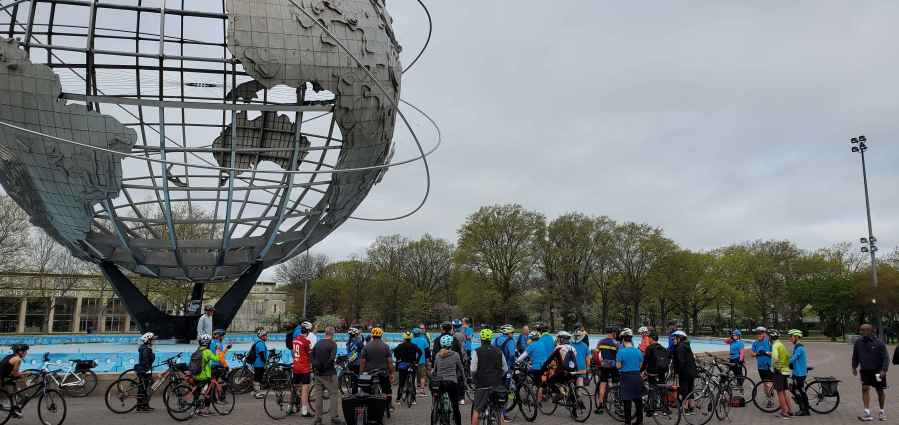
 Eastern Queens Greenway
[…] clear this greenway will eventual connect to the Long Island Greenway, and then eventually to the Empire State Trail, in addition to the Northern Queens […]
LikeLike