Thanksgiving is a season of tables and togetherness, but for hundreds of thousands of neighbors across New York City the holiday underscores a harsher reality: food insecurity remains widespread. In Queens alone nearly 300,000 people face food insecurity, including tens of thousands of children. Cranksgiving Queens on November 22 will be a local, pedal-powered response — a way for cyclists to turn everyday rides into meaningful deliveries of food to families in need. Join the group and you’ll be dropping off food at the historic Kissena Velodrome.

A track with history: the Kissena Velodrome
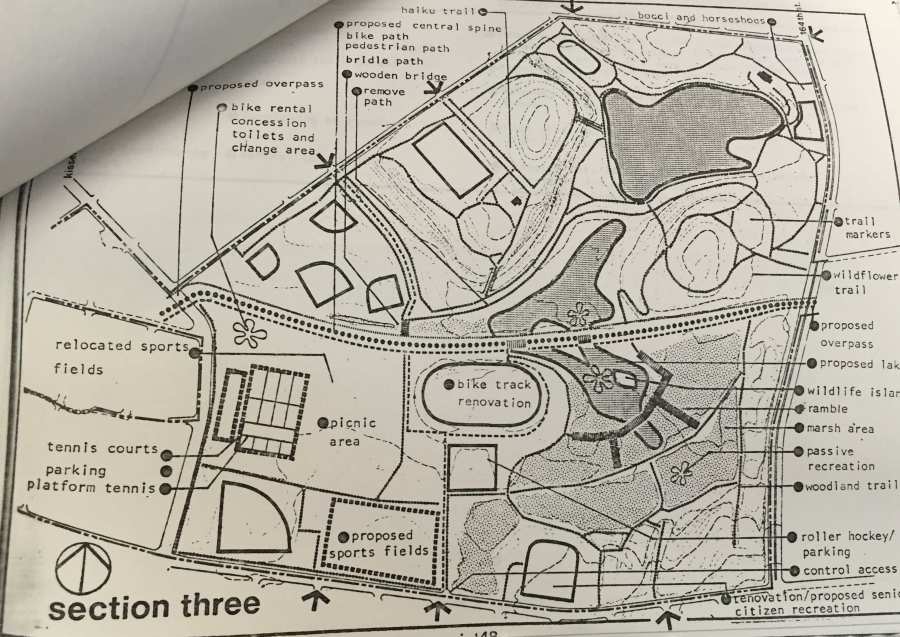
The Kissena Velodrome is more than a convenient meeting spot for this ride; it is one of New York’s most storied cycling places. Built in the early 1960s and envisioned then as a showcase for competitive track racing, the velodrome became nationally prominent when local racers there dominated the 1964 U.S. Olympic trials. For decades it served both as a training ground for elite athletes and as a place where city kids discovered the thrill of speed and community on two wheels.
The track’s hard-won survival reflects the cycles of attention urban recreational spaces often experience. After periods of neglect it was renovated and upgraded by the city, improving the surface, drainage, seating and fencing so it could continue hosting racers and neighborhood riders alike. Today Kissena remains the city’s only remaining velodrome and a living piece of Queens’ civic and cycling history.
Cranksgiving Queens: the plan
Cranksgiving began as a grassroots, bike-based food drive and has spread to more than 100 cities across the U.S. It’s a simple model: riders collect and transport non-perishable food items to designated drop-off points, turning commuting infrastructure into charity logistics. For Queens, assembling at the velodrome honors local cycling history while delivering practical aid to neighbors struggling to put food on the table.
Practical details for riders are straightforward: bring non-perishable Thanksgiving items (suggested budget $15–$20), carry them in a backpack or panniers. If you plan to join the group ride, meet at MacDonald Park at 10:00 am; smaller shopping stops nearby will be coordinated so we cover the donation list efficiently and arrive at the velodrome by noon. Or you can start from wherever you are and head directly to the Velodrome with your donations.
- Date: Saturday, November 22 from 10:00 am to 12:00 pm
- Optional Startpoint: MacDonald Park, at the Queens the World’s Borough sign
- Endpoint: Kissena Velodrome parking lot
- Register: here by November 20th
For more information on the ride, follow Central Queens Micromobility.
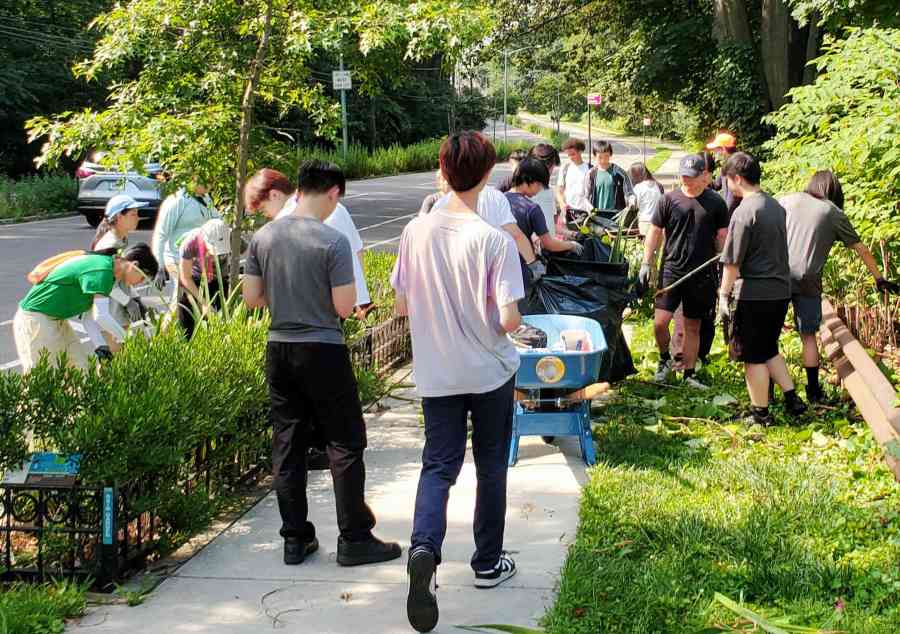
For more information on our friends at Kissena Synergy, learn about their donations and major park clean-up work.
Why greenways like Kissena are natural gathering points
Greenways — linear parks, trails, and corridors that stitch neighborhoods together — are vital urban infrastructure. The Kissena Park Velodrome is in the middle of the Eastern Queens Greenway, so it should have easy connections to communities from Woodhaven to Whitestone. Yet the Greenway has always had gaps and parts have fallen into disrepair.
Instead of letting the little bit of infrastructure we have crumble, we’re fighting to re-build and expand the greenway. Our work is focused on Eastern Queens, but there are numerous other greenways on Long Island, Northern Queens, and Central Queens we want to connect to as they’re built. Now is the time to come together and become the city we all want to live in.
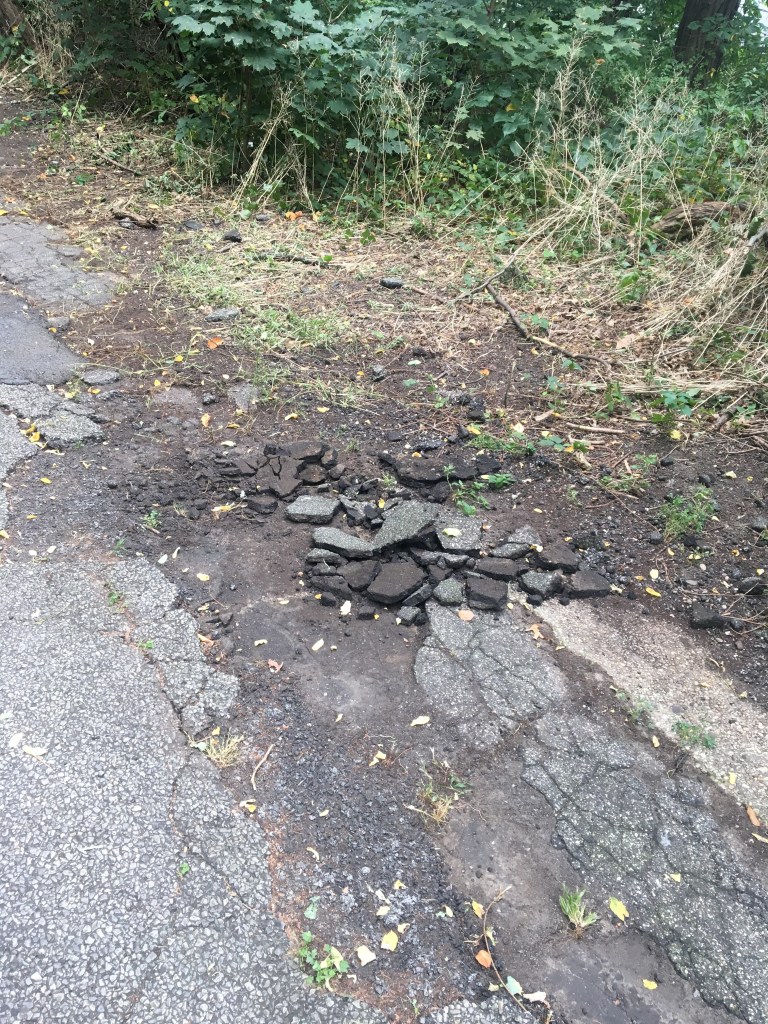
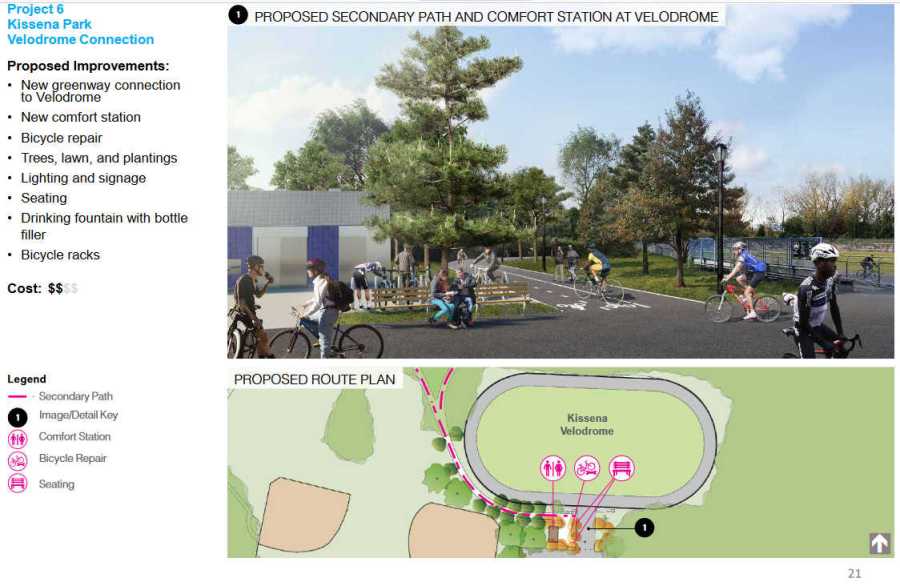
Although we were able to petition the city to make a Greenway plan (for at least some sections) and have $43.4 million dollars dedicated to it, we are still seeing delay after delay from the Department of Parks. If the greenway was finished by now, not only would this ride be easier, but kids would have better car-free access to more of their community. One of the specific projects we’ve advocated for is a real path connecting the Velodrome to the rest of the park, so everyone can enjoy this uncommon athletic facility for free.
This ride is about more than a one-off donation. It’s an expression of how active-transport networks empower civic action. When greenways and neighborhood routes are safe and continuous, they lower the barrier to volunteering, amplify the reach of community groups, and make mutual aid more resilient. Deliveries by bike are fast, low-cost, and visible acts that build shared norms of care across communities that might otherwise remain siloed.
Anchoring the event at the Kissena Velodrome also connects the present effort to a local lineage of cycling culture — reminding participants that when we maintain public spaces, we preserve the capacity to gather, to race, and to support one another. We are all part of a long chain working to improve our communities.
How to help
Sign up as soon as possible (deadline November 20) and indicate whether you’ll join the group ride or prefer to ride directly to the velodrome with donations. Volunteers from Kissena Synergy will be on-site to receive food; participants should plan to arrive by noon. As a small thank-you, pizza and sandwiches will be available at the finish for those who indicate they’ll stay.
This Thanksgiving week, let’s use our bikes to close gaps — between abundance and need, between neighborhoods, and between a city’s past and its civic future. Join Cranksgiving Queens and turn the simple act of riding into a practical force for community care.
 Eastern Queens Greenway
[…] We promoted it on Facebook and our blog, as well as generally on social media. Or friends from Eastern Queens Greensway blogged about our event. We set up a registration link via Google Forms. Because we were short on time, we […]
LikeLike